
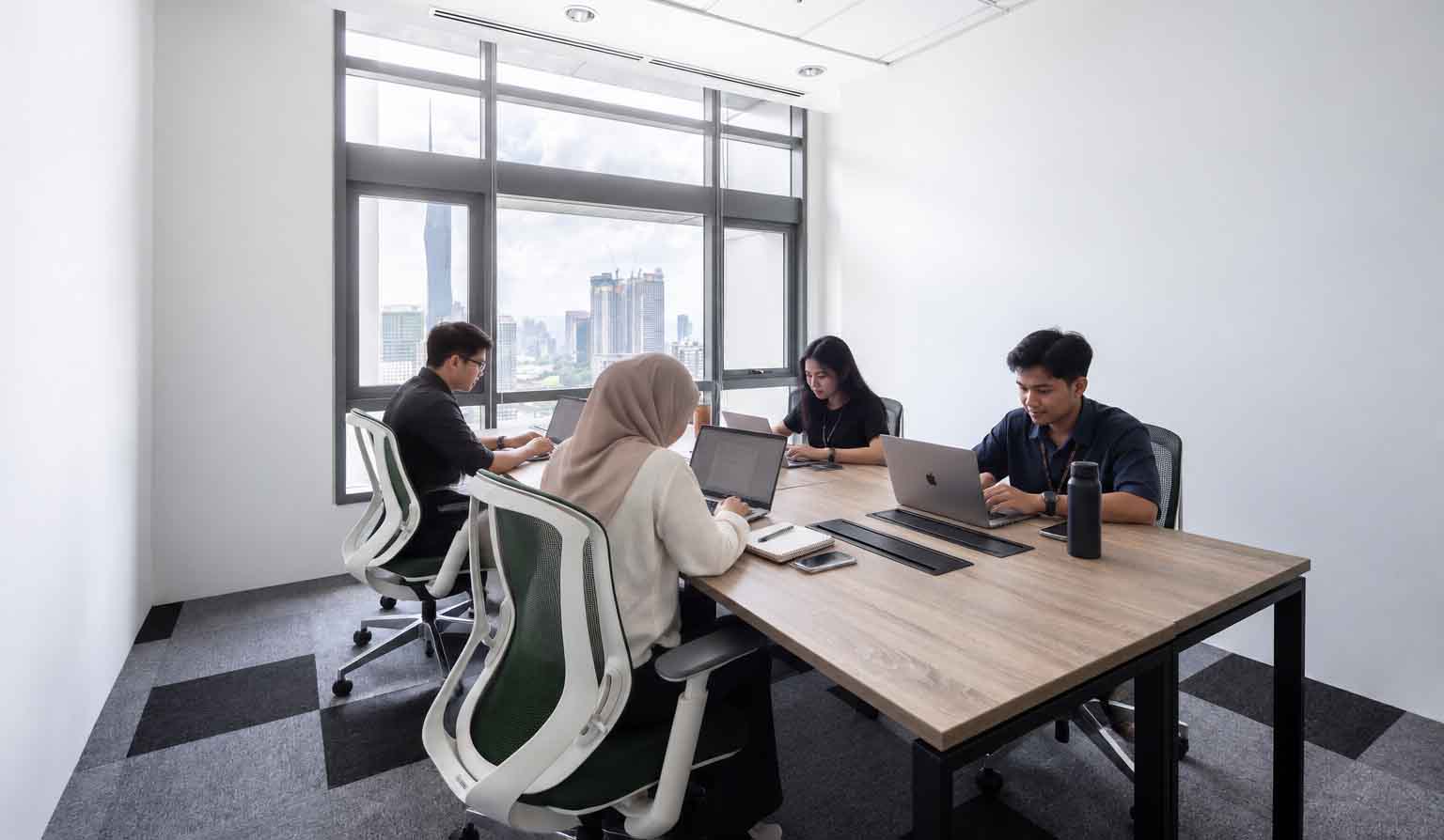
Not every employee needs to be at the office every day. As more organisations explore flexible working arrangements, businesses are beginning to rethink how they use their office space.
For companies with teams working across different locations or schedules, having a workspace that can adapt to their needs may offer a more practical way to manage daily operations.
Hybrid Work Is Becoming More Common in Malaysia
Flexible work has become an increasingly relevant topic among Malaysian employers. In March 2026, the Ministry of Human Resources (KESUMA) encouraged private-sector employers to consider flexible working arrangements based on their operational needs. These may include working from home, flexible hours, job rotation and hybrid work.
Source: Bernama – KESUMA Urges Employers To Adopt FWA Amid Energy Challenges (27 March 2026)
The public service has also introduced a Hybrid Working Day arrangement, which took effect on 1 August 2026. This reflects the growing attention given to flexible working arrangements within the public sector.
Source: Public Service Department (JPA) – Hybrid Working Day Policy
Why Are Businesses Rethinking Their Office Setup?
When employees work on different schedules, some businesses may find that their office space is not being used to its full potential every day.
Instead of assigning a permanent desk to every employee, businesses can explore workspace arrangements that better match their team’s attendance patterns.
A flexible setup may also provide access to shared facilities, meeting rooms and collaborative areas. The most suitable arrangement will depend on the team’s size, work requirements and budget.
What Should SMEs Consider When Choosing a Flexible Workspace?
Before choosing a workspace, consider these four points:
- Match the desks to your team’s needs. Hot desks can suit employees who only need a workstation occasionally, while dedicated desks may be more suitable for those who prefer a consistent setup. Private offices provide a more enclosed environment for teams that need their own space.
- Make room for team discussions. Meeting rooms offer a suitable place for team catch-ups, client appointments and collaborative sessions.
- Consider flexibility. Business needs can change over time. Explore workspace options that can accommodate changes in team size and working patterns.
- Choose a convenient location. Access to public transport, nearby amenities and major business areas can make office days more convenient.
For more tips, read our guide: Choosing a Coworking Space in KL: Beyond the Desk.
A Workspace That Fits the Way Your Team Works
A flexible working arrangement does not mean giving up a professional working environment. It means finding a setup that supports the way your team operates.
At Emspaced, we offer flexible workspace options at KL Eco City and KL Sentral, including hot desks, dedicated desks, private offices and meeting rooms.
Whether your team needs a place for focused work, client discussions or shared office days, you can explore a workspace that suits your business needs.
Book a tour with Emspaced and discover a workspace that fits your team’s routine.
Frequently Asked Questions
What is a hybrid working arrangement?
Hybrid work combines office-based and remote working. Employees may work from the office on selected days and from another suitable location on other days, depending on their organisation’s arrangement.
Is a coworking space suitable for a hybrid team?
It can be an option for teams that do not need a permanent office setup every day. Shared workstations, meeting rooms and private offices offer different workspace choices depending on how the team operates.
What should a business consider before changing to a hybrid setup?
Consider team communication, work schedules, suitable technology, workspace requirements and how employees will collaborate when working from different locations.
Disclaimer: This article provides general business and workspace information. Working arrangements differ between organisations and should be planned according to each business’s operational needs.